
The short answer: clean the tracks with a dry rag (never lubricate them), then apply a silicone-based or white lithium grease spray to the hinges, rollers (metal ball-bearing ones only), and springs. Wipe off the excess, skip the WD-40 as a long-term fix, and run the door through a few open-close cycles to work the lubricant in. Do this now, before the first hard freeze, and your door will move easier and quieter all winter.
Why Fall Is the Right Time to Do This
Indianapolis winters bring ice, road salt, and big temperature swings, and all three are hard on a garage door's moving parts. Cold metal contracts and binds, salt spray tracked in on tires accelerates rust on hinges and tracks, and dried-out lubricant from a humid summer leaves hardware exposed right when it needs protection most. A thorough lubrication now, before the weather turns, is cheap insurance against a door that groans, sticks, or jumps the track in January.
Tools You'll Need
- Garage door-specific lubricant (silicone spray or white lithium grease spray)
- Clean, lint-free rags
- A soft-bristle brush or old toothbrush
- A sturdy step ladder
- Safety glasses
- Shop vac or stiff brush for track debris (optional but helpful)
Step-by-Step: How to Lubricate Your Garage Door
- Close the door and cut power to the opener. Unplug it or switch off the breaker. You'll be working with the door at rest, and you don't want it triggered while your hands are on the hardware.
- Do a quick visual check first. Look at the springs, cables, and rollers for obvious rust, fraying, or stretched gaps between spring coils. If anything looks damaged, stop and skip to the technician section below — lubricant won't fix a worn part, and working around bad hardware is where injuries happen.
- Wipe down the tracks with a dry rag. Remove dust, old grease, and grit. This is the one place on the whole system where you should never spray lubricant — a slick track just collects more dirt and can make the rollers slip instead of roll.
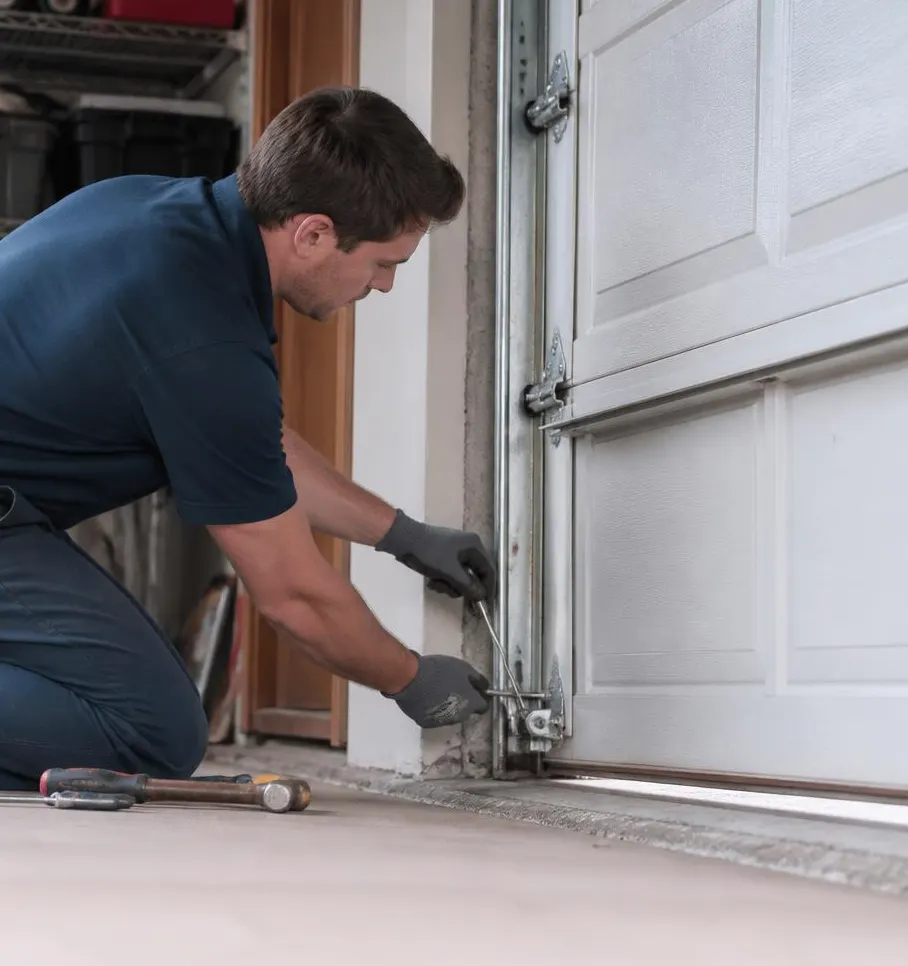
- Lubricate the hinges. Spray a light coat on each hinge where the sections pivot, working the door up and down partway by hand (power still off) to work it into the joint. Wipe away drips so it doesn't run down the panel.
- Lubricate the rollers — but only the metal ball-bearing type. Spray the bearings at the center of each roller, not the roller wheel itself. If your door has nylon rollers, leave them alone; most are sealed and factory-lubricated, and spraying them can attract grime or degrade the nylon over time.
- Give the springs a light coat. With the door closed and at rest, spray the torsion spring(s) above the door or the extension springs along the upper tracks. A light, even coat is all you need — you're not trying to saturate them, just keep them from drying out and rusting.
- Lubricate the lock mechanism and armbar if your door has one. A small amount of spray in the keyhole and along the sliding bar keeps it from sticking in cold weather.
- Wipe off excess lubricant everywhere, then disconnect the opener's emergency release, cycle the door by hand a few times, and reconnect power. Run it electrically once or twice and listen — it should be noticeably smoother and quieter.
Products to Use — and What to Avoid
Stick with a lubricant made for garage doors: a silicone-based spray or white lithium grease spray. Both hold up well across Indiana's temperature range and won't gum up in the cold.
- Avoid WD-40 as your main lubricant. It's a solvent and light penetrant, good for loosening a stuck bolt or displacing moisture, but it evaporates quickly and won't protect moving parts through a winter.
- Avoid heavy automotive grease or motor oil. These attract dust and grit, which turns into a gritty paste on hinges and tracks.
- Never put any lubricant in the tracks themselves. Keep them clean and dry; the rollers should glide on a clean metal surface, not a lubricated one.
- Skip lubricant on nylon rollers unless the manufacturer specifically says otherwise.
What a Homeowner Can Handle vs. What Needs a Technician
Cleaning tracks, lubricating hinges and metal rollers, and treating the lock mechanism are all reasonable DIY tasks with the door closed and the opener unplugged. What's not a DIY job: adjusting spring tension, replacing a spring, realigning a door that's off its track, or diagnosing an opener that grinds, reverses, or won't respond. Torsion springs in particular hold significant stored energy, and they're not something to loosen, tighten, or remove on your own.
When to Call Indianapolis Overhead Door Co
If lubrication doesn't quiet a grinding or squealing noise, if you spot a rusted or gapped spring, or if the door feels heavier or slower to respond than it used to, it's time to call in a technician rather than keep spraying. Our Garage Door Maintenance visits cover a full tune-up — balance check, hardware inspection, and lubrication done right — and if a spring is showing wear, our Spring Replacement service handles it safely so you're not dealing with a snapped spring on a freezing morning.
If your garage door needs a closer look before winter sets in, call Indianapolis Overhead Door Co today — proudly serving Indianapolis, Carmel, Fishers, Lawrence, Speedway, Beech Grove, Greenwood, and Zionsville.